By Dr. Julie Marchiol
Lately, I’ve been hearing the same thing from so many patients: “I just don’t feel like myself.”
For some, it shows up as brain fog or forgetfulness. For others, it feels like anxiety, emotional overwhelm, irritability, or struggling to focus the way they used to. Many people describe feeling mentally exhausted even when they’ve technically “rested.” Others feel constantly reactive, overstimulated, or unable to fully calm down.
And what’s difficult is that many of these symptoms slowly become normalized. People assume it’s just stress. Or aging. Or that life is simply busy.
But often, what I see clinically is something deeper: a nervous system that has been stuck in survival mode for far too long.
The brain is incredibly adaptive. It is constantly responding to stress, hormones, inflammation, trauma, sleep patterns, overstimulation, and the demands of modern life. Over time, when the brain is repeatedly pushed into a heightened state of alertness, it can begin operating from protection instead of regulation.
That state can affect nearly everything.
Focus becomes harder. Emotional reactions become quicker. Sleep feels less restorative. Small stressors suddenly feel overwhelming. Many patients say they feel “on edge” all the time, even when nothing is necessarily wrong.
What’s important to understand is that this is not a character flaw or weakness. It’s physiology.
One of the most fascinating tools we use at Ascent Health Center to support this is neurofeedback.
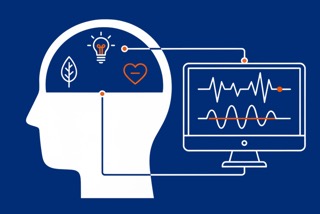
Neurofeedback is a non-invasive therapy that helps the brain recognize and improve unhealthy patterns. I often describe it as physical therapy for the brain. Through real-time feedback, the brain is gently trained into more balanced and regulated states, helping improve how it communicates and responds.
What makes neurofeedback so powerful is that many people don’t realize how dysregulated their nervous system has become until they finally experience calm again.
Patients often tell me things like:
“I can finally pause before reacting.”
“My brain feels quieter.”
“I feel clearer and more present.”
“I don’t feel emotionally hijacked anymore.”One patient recently shared something that deeply resonated with me. She explained that when life became overwhelming, she used to become anxious and reactive very quickly. After neurofeedback, she noticed she could separate what she felt from how she responded. She felt calmer, more articulate, and more grounded. She even described feeling like she was seeing life through a different lens. Perhaps most importantly, she said it helped her create boundaries that others could no longer break down.
That’s the kind of transformation that excites me most. Because brain health is not just about memory or focus. It impacts how we experience our relationships, our emotions, our resilience, our productivity, and our overall quality of life.
At Ascent Health Center, we look at brain health through a broader lens. Hormones, inflammation, nervous system regulation, sleep, trauma history, metabolic health, and structural alignment all influence how the brain functions. Neurofeedback becomes one part of a larger conversation around helping the body and brain communicate more effectively.
If you’ve been feeling unlike yourself lately—foggy, overwhelmed, reactive, emotionally exhausted, or mentally stuck—your brain may simply be asking for support.
And the good news is, the brain has an incredible capacity to adapt, heal, and change.
Sometimes it just needs the right environment to do so.
Is Your Brain Stuck in Survival Mode?